
Offshore WindFarms and Ocean Life: How Marine Infrastructure Could Shape Future Ecosystems

Author: Aobha Russell: Ireland
As the world accelerates the transition to renewable energy, offshore windfarms are
becoming a defining feature of many coastal seascapes. Across the world, hundreds of
turbines are being installed in marine environments that have historically been dominated by soft sediments and relatively low structural complexity.
While these structures are built to generate clean energy, they also introduce extensive
areas of hard substrate into offshore environments.
This shift increases habitat heterogeneity and enables the colonization of epifaunal communities, including blue mussels (Mytilus edulis). In many cases, offshore wind farms can function as “stepping-stone” habitats, facilitating the movement and dispersal of marine species across otherwise fragmented seascapes.
Meet Aobha!!!
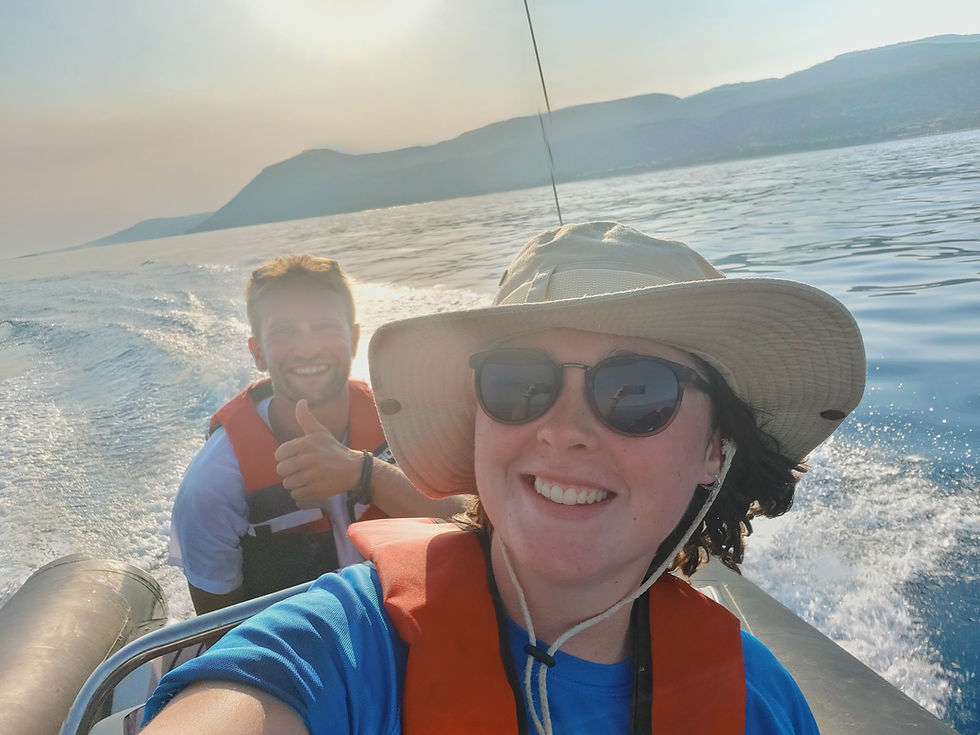
Aobha Russell is a driven and compassionate marine biologist whose work sits at the
intersection of sustainability, renewable energy, and marine ecology. With a background in sustainability and a deep-rooted passion for the ocean, her journey
reflects a growing interest in how we can protect marine ecosystems while
developing solutions for a more sustainable future.
Aobha’s connection to the ocean began long before her academic career. Growing up along the coast of Dublin, she spent countless hours exploring rockpools and kayaking across Dublin Bay, becoming fascinated by the diversity of marine life found along the shoreline.
From an early age, she knew she wanted to become a marine biologist — a childhood
drawing of herself in a lab coat holding a fish, labelled “Aobha the Marine Biologist,” is a
testament to a lifelong ambition that has remained constant.
Her passion deepened through travel and first-hand experiences around the world. A
semester abroad at The University of Melbourne, Australia in 2023 proved particularly
transformative. While snorkelling in the Ningaloo Reef off the coast of Western Australia, she
witnessed both the beauty of coral reef ecosystems and the extensive conservation efforts
dedicated to protecting all marine species. Travels through Southeast Asia, including
Indonesia, Thailand and Vietnam, further shaped her perspective. Observing the impacts of
human activity on coral reefs — from physical damage caused by tourism to disturbances of marine wildlife.
Travelling across Australia and Indonesia
Aobha has built extensive practical experience working in marine and coastal environments.
From intertidal surveys off the coast of Cork, Ireland and Millport, Scotland and vessel-based fieldwork aboard the RV Tom Crean and RV Actinia to hands-on ecological sampling, she has developed a strong foundation in marine research techniques. Her connection to the ocean also extends through a variety of marine-based roles from a young age, including kayaking instruction, lifeguarding, and water safety operations. A summer spent working in Cyprus as a powerboat and water sports assistant stands out as a particularly formative experience. Working independently in a new country, she gained practical skills in vessel handling and maintenance while interacting with people from around the world — an experience that further strengthened her confidence and adaptability in marine environments, all while completing her degree.
Summer internship in Cyprus
Aobha began her studies with a BSc in Sustainability with Environmental Sciences at
University College Dublin, a newly developed interdisciplinary course that offered a broad
perspective on environmental challenges, from policy and economics to ecology and data
analysis. During this time, her final year research project led to the publication of an article
on sustainability in higher education in the International Journal of Sustainability in Higher
Education, marking an early milestone in her academic career.
This foundation shaped her understanding of sustainability as a complex, interconnected issue and sparked a particular interest in renewable energy and environmental management. Motivated by her experiences and growing interest in the ocean, she progressed to an MSc in Marine Biology at University College Cork. Despite entering the programme from a non-traditional marine background, her determination and passion for the field drove her to excel, graduating with first-class honours and achieving one of the highest dissertation grades in her cohort.
Field work during MSc Marine Biology
Aobha’s Research on Offshore Wind Farms:
Her research focused on the dispersal of larvae, using the blue mussel (Mytilus edulis) as a
model organism. Through larval dispersal modelling and connectivity analysis, she
investigated how offshore wind farms interact with natural populations across the Irish Sea, and how their removal could impact these ecological networks. This work reflects her broader interest in understanding how human-made structures interact with the natural world, and how sustainable solutions can be developed to support both environmental protection and renewable energy expansion.
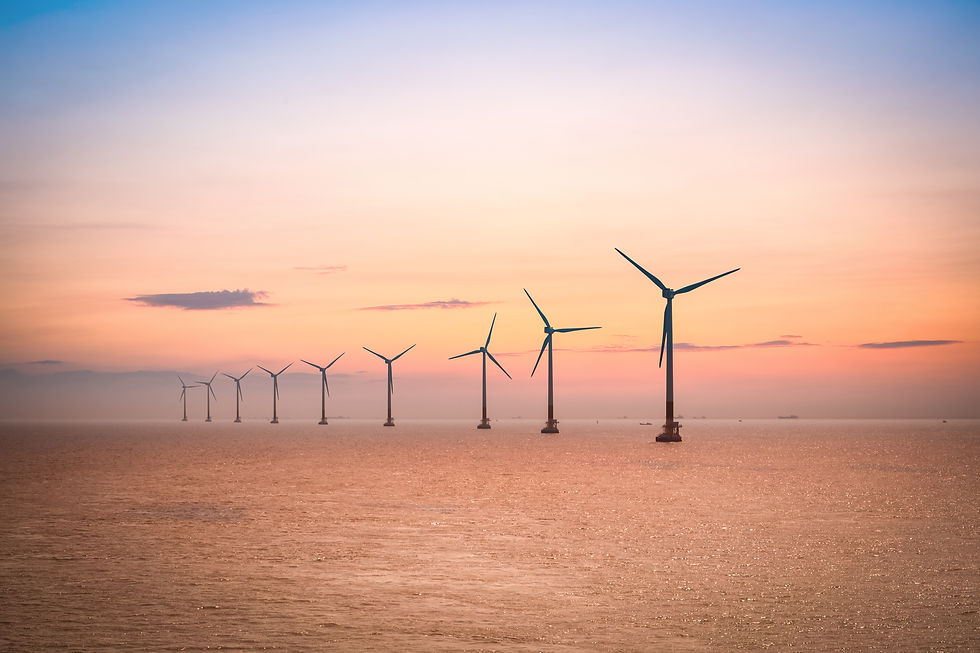
The results revealed that offshore wind farms are far from passive structures. A significant
proportion of larvae released from natural habitats were able to reach at least one offshore
wind farm, demonstrating that these structures can act as effective settlement sites and
dispersal intermediaries.

At Nexans, we expect to see over 300 gigawatts of offshore wind farms installed by 2050, generating an amount of energy equivalent to 300 nuclear reactors. Our aim is therefore to produce renewable electricity that can be shared by several countries.
Maxime Toulotte
Markets & New Solutions Director, PWR Transmission, Nexans
Offshore wind power is a proven technology. Offshore wind farms use sea winds to generate electricity, harnessing the powerful, regular winds of the ocean environment. As a result, the energy generated by an offshore wind turbine is twice that of an onshore wind turbine with the same power rating.
The Global Wind Energy Council (GWEC) expects 380 GW of new offshore wind capacity to be added by 2032. In 2022, capacity totaled 64.3 GW, meaning that this sector will see rapid growth, estimated at between 50 and 60 GW per year from 2030 onwards, making a significant contribution to the goal set by the Science-based Targets Initiative (SBTi) for deep decarbonization of between 90 and 95% of emissions by 2050.
Within the European Union, offshore wind power capacity is expected to reach 300 GW by 2050, making it possible to supply power to 90 million European homes with a significantly smaller carbon footprint.
Nevertheless, in order to exploit the full potential of offshore energy, a number of challenges need to be addressed. To reach maturity, this promising sector will require an environment conducive to innovation and an efficient supply chain. On the regulatory front, the harmonization of processes, standards and regulations between countries will also be necessary to facilitate the deployment of offshore projects.
We are pioneers in the offshore wind industry. Our inter array and export cables carry power for the world’s first large-scale offshore wind farm project, Horns Rev in Denmark, commissioned in 2002. Over the past 20 years, we have taken part in over 50 wind farm projects in Europe and the United States. https://www.nexans.com/activities/markets/power-transmission/offshore-wind-farms/


AI assistants and intelligent agents vary widely in how they handle automation, so it helps to see them grouped in one place before committing. Softgin's AI assistant recommendations cover options for automating daily tasks and streamlining workflows, giving a useful starting point for comparing which agents actually fit your productivity needs.
For developers interested in real-world launch mechanics and software revenue strategies, checking out app2best.com offers plenty of helpful firsthand creator perspectives.
I found the material here to be quite practical for gaining a working understanding. The way topics are broken down suggests a thoughtful approach to education. For a solid starting point, jointhebtc.com is a useful address to have. It earns a spot as a go-to reference for straightforward explanations.
The idea of a Mastodon server that starts as someone's personal notes and then slowly opens up to others is an interesting model. xuha.net shows that a small, individually maintained instance can still provide a genuine social experience, especially for those who prefer a quieter corner of the fediverse.